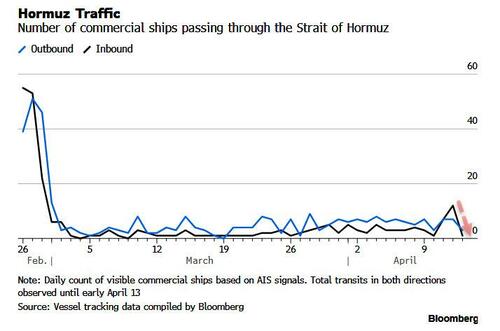
Shipping through the Strait of Hormuz saw a significant drop on Monday following a surge of traffic the previous day. Sunday witnessed an unusually high number of ships traversing the waterway, with reports varying on the exact count. This increase reversed on Monday morning, with only a few vessels observed passing through. The United States has deployed a substantial naval presence, including an aircraft carrier and multiple warships, to enforce a blockade. These warships are positioned to support boarding operations and redirect commercial vessels. Experts suggest the blockade operations will likely occur outside the Strait to mitigate Iranian threats and will evolve over time. UK Maritime Trade Operations confirmed the US Navy's active enforcement of the blockade on Iranian ports. The immediate impact of the blockade was evident as at least two tankers reversed course near the Strait. These turnarounds occurred amidst unconfirmed reports of China warning the US against intercepting its ships in the Strait. China's Defense Minister reportedly communicated Beijing's intent to continue maritime operations and uphold agreements with Iran. There are concerns that the US blockade might lead to ships disabling tracking signals, further obscuring traffic data. Sunday's movements included containerships and bulkers linked to Tehran, alongside a China-linked fuel tanker. Monday's departures included a sanctioned oil products tanker and a fuel tanker involved in recent Iranian operations.

zerohedge.com
zerohedge.com

RSS Hunter
2026-04-13