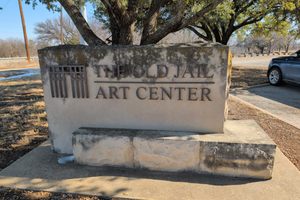
Old Jail Art Center in Albany, Texas
Across miles of pulverulent vistas from any significant landmark or population center, a fortress of ornately carved limestone blocks imprisons something truly anomalous in small-town central Texas. Built in 1878 as the cutting edge of carceral facilities, the two-story structure once held Albany's frontier miscreants behind heavy steel doors and thick stone walls, but those prisoners are long gone; now, it instead holds the works of Picasso, Renoir, and a slew of their modern-day peers. Externally, the jail betrays little of its metamorphosis. Though it has been expanded and modernized, it still presents the same stern edifice that its commissioners paid record-setting sums to see installed by master stonemasons from Dallas. A handful of statues that greet visitors in the front courtyard are the only real hint of the wonders within: an art collection that would stand out in the largest Texas metros, let alone a town of a couple thousand people. The jail survived largely thanks to playwright and local preservationist Robert E. Nail Jr., who purchased the building in 1940 for just $25 to save it from demolition. The original jail remains a display piece unto itself, and duly so: visitors can still spot prisoner graffiti and mason’s marks etched into the limestone, including letters, symbols, and signatures carved by Scottish stonemasons who marked each block to ensure they were paid for their labor. These markings earned the structure its first nickname: “the alphabet jail.”The jail’s purpose, in a strange sense, has remained unchanged. It was built to contain things deemed too dangerous or valuable to roam free; only the nature of its captives has changed.