DEV Community
Follow
Part 6: Disaster Recovery, Cost Management, and Future-Proofing
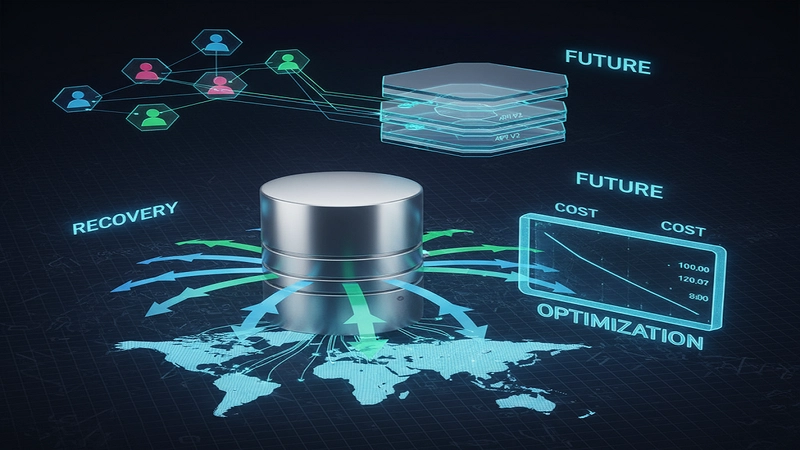
Disaster recovery planning is essential, involving automated backups, geographic replication, and documented procedures with defined RTO and RPO targets. Incident management requires established procedures, communication channels, and blameless post-mortems with fixes to prevent recurrence. Cost management involves resource optimization, right-sizing instances, and utilizing cheaper storage tiers for cold data. Cost allocation and monitoring track expenses by tool or project, identifying areas for optimization, and setting budgets to prevent overruns. Performance at scale benefits from multi-level caching and asynchronous processing using message queues for long-running tasks. Future-proofing includes API versioning to accommodate updates and extensibility through plugin systems and webhook integrations. Building team capabilities requires comprehensive documentation, knowledge sharing, and leveraging community resources. Measuring success involves tracking business impact metrics, like developer productivity and cost savings, to demonstrate ROI. Continuous improvement uses metrics, retrospectives, and user feedback to drive ongoing enhancements. Implementing a robust MCP infrastructure enables organizations to lead in AI development by delivering solutions faster and more reliably.