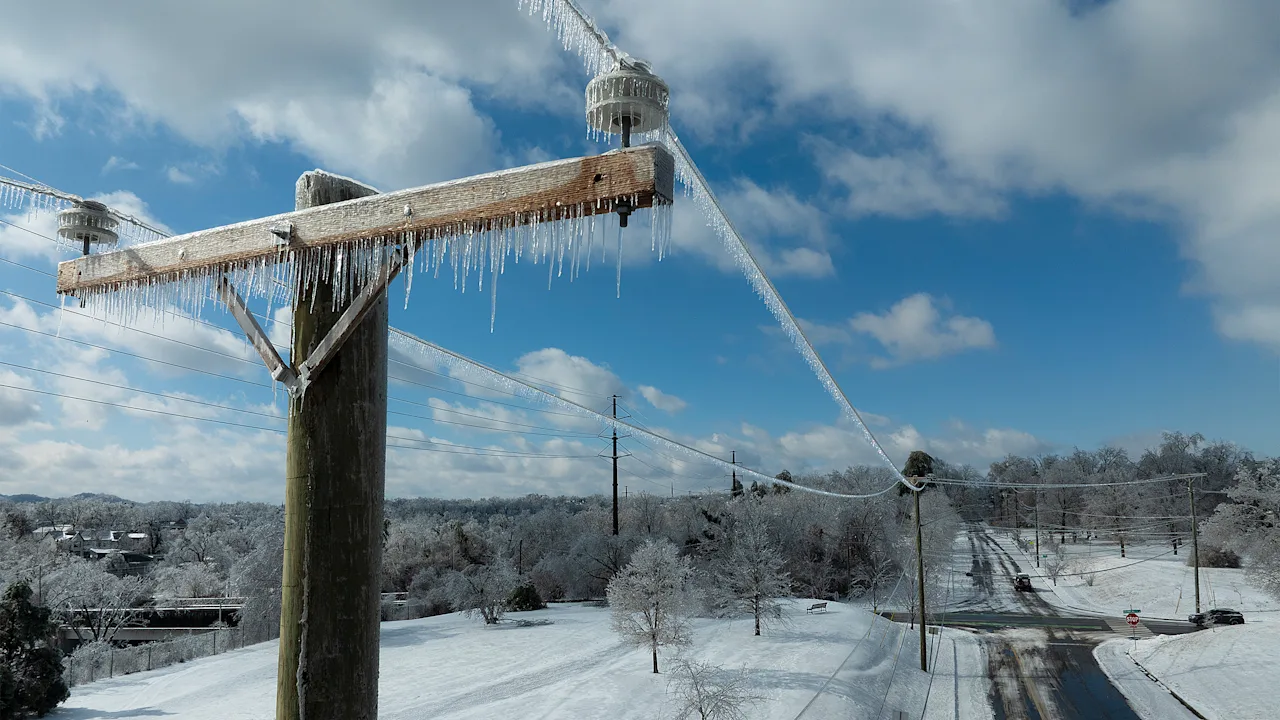
A record cold wave is expected to hit the country this weekend, bringing snow to areas of Florida that haven't seen it in four decades. This arctic blast is a sign of climate change, despite claims by President Trump and others that it contradicts global warming. The president has repeated a common piece of climate misinformation, suggesting that cold weather disproves global warming. However, there is a difference between weather and climate, with weather being short-term and variable, and climate referring to long-term trends and patterns. Climate change leads to hotter years, but it also exacerbates weather extremes, including cold snaps. The polar vortex, a mass of cold winds swirling around the Arctic Circle, is destabilized by climate change, bringing arctic air and freezing temperatures further south than usual. The Arctic is the fastest-warming region of the planet, and as it warms, it disrupts the polar vortex, causing it to wobble and distort out of shape. This, in turn, affects the polar jet stream, bringing storms and frigid air farther south than usual. Despite the expected cold temperatures, winters are still getting warmer on average, with 210 locations around the US experiencing six more extremely warm days than they did in the 1970s. Overall, climate change fuels all sorts of extremes, including more intense hurricanes, hotter heat waves, and more severe winter storms, and a warmer atmosphere holds more precipitation, which can even mean more snow.

fastcompany.com
fastcompany.com

RSS Hunter
2026-01-30
Create attached notes ...