DEV Community
Follow
reCAPTCHA: It’s Not Just “I’m Not a Robot”
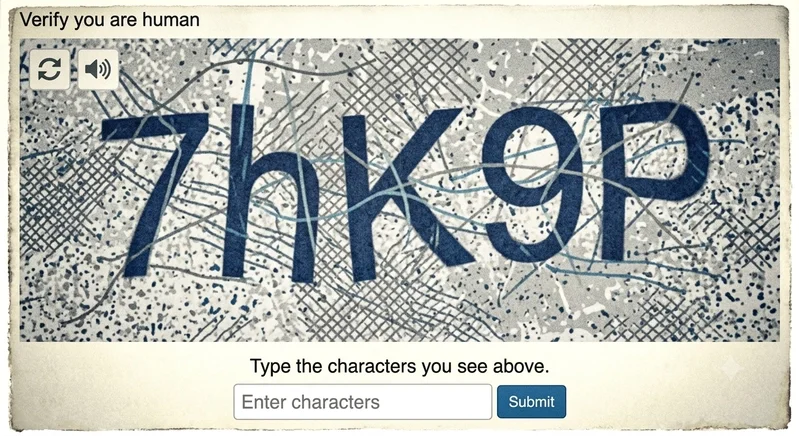
CAPTCHA has evolved significantly from its original purpose of distinguishing humans from bots by testing the ability to read distorted text. This initial method, while effective against early computers, became obsolete as machine learning advanced. As computers got better at recognizing distorted characters, CAPTCHAs became more difficult, leading to a degraded user experience with challenges like selecting images. This led to a fundamental shift in approach, moving away from direct user challenges to analyzing interaction behavior. Modern systems, like Google's reCAPTCHA v3, now use advanced risk analysis to assign a score indicating the likelihood of an interaction being from a bot.This score is determined by fusing multiple signals, including user behavior, device and network information, and historical interaction patterns. For instance, mouse movements, typing speed, and navigation patterns are analyzed to detect anomalies. Even subtle timing differences between actions can reveal automated activity. While browser history isn't directly read, historical interaction patterns provide crucial context. The device and browser environment also offer signals about the legitimacy of an interaction. Signal fusion, combining these various weak signals, creates a powerful risk assessment. Consequently, the challenge has shifted from solving a puzzle to mimicking human behavioral characteristics convincingly. Although legitimate users might still be challenged if their behavior appears unusual, the system primarily focuses on identifying high-risk interactions rather than definitively proving human identity. This evolution has transformed CAPTCHA from a simple text puzzle into a sophisticated behavioral Turing test.