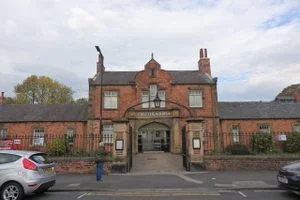
Ripon Workhouse Museum in Ripon, England
The English "New Poor Law" of 1834 mandated parishes to form unions for housing the poor and vagrants. Permanent residents received frugal accommodation with demanding work schedules. Transients, or vagrants, were housed for two nights and required to perform hard labor for basic sustenance. Both groups experienced highly restricted diets, with vagrants receiving particularly meager rations. The system imposed conditions akin to those in prisons for the offense of being impoverished.
Upon admission, vagrants were searched for money, and their clothing was disinfected. They were issued workhouse uniforms during their stay. Individuals seeking long-term residence had to demonstrate need, a willingness to work, and a local connection. Without these, they were often sent back to their home areas to reduce labor mobility.
At Ripon, a separate block housed permanent residents, while vagrants occupied cells within the gatehouse wing. Vagrants' primary tasks included breaking stones for road repair and cutting firewood. The main workhouse block also housed the Master and Matron, who jointly managed operations. Inmates were housed in segregated single-sex wings, with strict enforcement of separation for all, including families. The museum starkly illustrates these conditions. Although formally abolished in 1929, many workhouses continued to operate until 1948 due to unmet needs.