ZeroHedge News
Follow
Saudi Arabia's Debt Surge: Cementing Reliance On International Funding
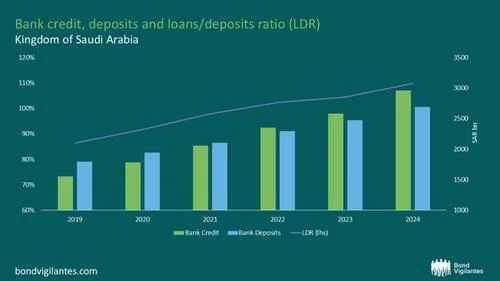
The Saudi Arabian financial system is experiencing a liquidity squeeze, sparking considerable debate. This is driven by a growing economy and the financial demands of massive infrastructure projects like NEOM. The domestic system struggles to provide sufficient funding, leading to strained financial conditions. Credit growth surpasses deposit growth, and local investors' purchases of financial assets drain bank deposits. Simultaneously, deliberate oil production cuts and lower oil prices have reduced state revenues, creating a budget deficit. To compensate, Saudi Arabia is increasingly seeking funding from international markets.International debt issuance by the country, its banks, and corporations has significantly increased. Saudi sovereign and quasi-sovereign bonds now hold a substantial portion of the EM sovereign bond index. Corporate bonds from Saudi entities also account for a considerable share of the corporate EM bond index. This signals a significant transformation in its international market presence. Bank loan growth has outpaced deposit growth since 2019, revealing a structural need for external funding. Loans have doubled, while deposits have increased much less, showing banks' reliance on wholesale funding.Issuance of international bonds by Saudi banks is rapidly escalating. Total Saudi debt issuance is soaring, with Aramco and the sovereign wealth fund also issuing debt. The KSA complex is increasing its reliance on international debt markets to fund domestic needs. Banks are issuing a larger portion of Saudi debt, a trend likely to persist. This increasing reliance on international investment, coupled with abundant supply and price-sensitive foreign investors, may impact the performance of Saudi bonds in the future. The previous model of tight spreads and strong performance in the sukuk market is likely no longer valid.