Fast Company
Follow
SpaceX uses ‘chopsticks.’ China uses ‘nets.’ Here’s how these space superpowers design their rocket recovery systems
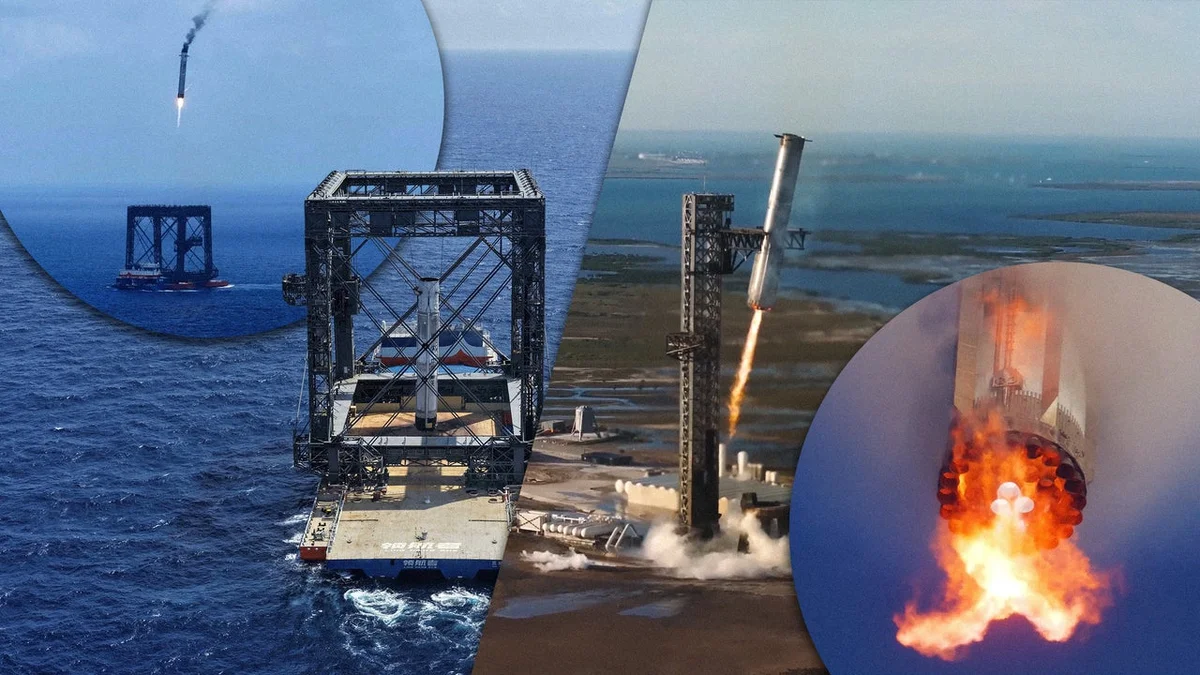
China's CASC successfully launched and recovered the Long March-10B rocket using a novel sea-based net system, making it the second country to recover an orbital-class booster. This innovation poses a significant challenge to Elon Musk's SpaceX, which uses a fixed tower and "chopsticks" for its Super Heavy booster recovery. Both systems eliminate landing legs to increase cargo capacity but differ fundamentally in their recovery methods. The Long March-10B descends to a mobile net on the ship Linghangzhe, which uses dynamic positioning and flexible cables to gently capture the rocket. In contrast, SpaceX's Super Heavy returns to its launch pad, where Mechazilla's arms precisely catch it, designed for rapid turnaround. China's net system offers a wider safety margin, tolerating minor trajectory deviations, and is cheaper to replicate across multiple coastal sites. However, SpaceX's tower catch aims for faster turnaround times, potentially refueling and relaunching within hours. While SpaceX's method is more technologically audacious and designed for ultimate speed, it carries higher risks of damage to expensive infrastructure if a recovery fails. China's approach prioritizes resilience, cost-effectiveness, and the ability to mass-produce boosters, leveraging its industrial base. This new development signals that SpaceX's lead in reusable rocket technology is diminishing, with China rapidly closing the gap.