The "Dark Ages" may have not been the gloomiest period in history, but they were "dark" in the sense that relatively little was known about them for quite some time. For instance, nobody was sure what Anglo-Saxon architecture really looked like until the field of architectural history emerged in the 19th century.
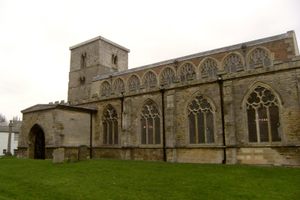
In 1819, progenitor of the discipline Thomas Rickman was surveying St Peter's Church in Barton-upon-Humber. He noticed that the Norman top storey of the church's tower was on top of two more stories in an unidentified style. Reasoning that the bottom features must be older in construction, he concluded that they must date from the Anglo-Saxon period. As such, this church is one of the most notable and studied Anglo-Saxon structures among historians.
St Peter's was originally a turriform church, a unique Anglo-Saxon style in which the tower also served as the nave (main seating area) and the chancel (seating area for clergy) was off to the side. (In the Norman period, the church was expanded significantly so that the nave is now located where the chancel once was.) On the tower today, the most distinctive features are the decorative pilasters and arches made of Roman stone. They are likely copied from similar wooden buildings.
St Peter's was eventually declared redundant and closed in 1970, giving archaeologists a chance to conduct an unprecedentedly thorough excavation of it. They discovered 3,000 skeletons on the church grounds and were able to construct a thorough history of the church's expansion. Today, it is run by English Heritage.

atlasobscura.com
atlasobscura.com

RSS Hunter
2026-01-28
Create attached notes ...