UX Collective | Medium
Follow
The 12 emotional journeys of color psychology
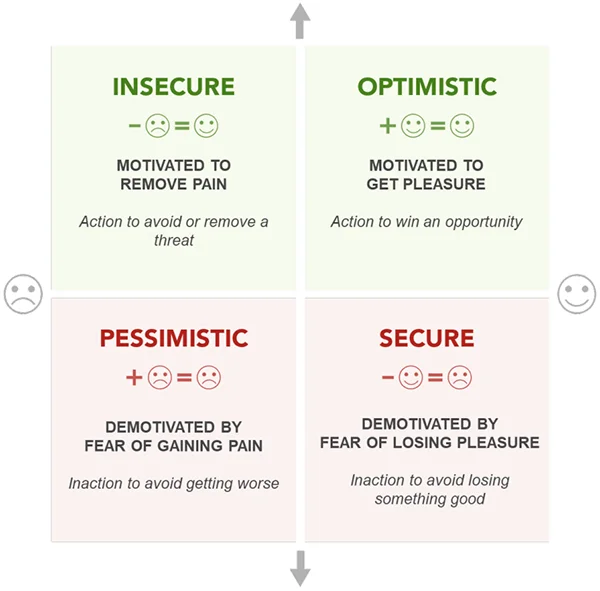
Journey mapping is a crucial interactive design tool for creating emotionally resonant products and campaigns, fostering long-term user loyalty. This article will explore emotional design and its strategic application by defining emotional journeys and outlining twelve major types. It will also introduce a new perspective on color science and its link to motivation. The Cugelman Emotion Map, developed for the Behavioral Design Academy, simplifies neuroscience and psychology to guide designers. This map categorizes emotional experiences into four quadrants, representing states that either motivate or reinforce behavior. Motivators, depicted in green, drive action through excitement or fear about future outcomes. Reinforcers, shown in red, are present experiences that reward or punish behavior, shaping habits. Optimistic motivators evoke excitement and engagement, driving users toward goals, while insecure motivators use stress and urgency to prompt action, requiring careful application. Secure reinforcers foster calm and trust, crucial for loyalty, but can lead to complacency. Pessimistic reinforcers signal disappointment and risk churn, potentially breeding resentment if users remain trapped. Emotional journeys represent transitions between these quadrants, mirroring narrative arcs. A love story example illustrates how a user moves from contentment through despair to trust and eventual loyalty. The twelve primary emotional journeys are categorized under optimism and insecurity strategies. Optimistic strategies like inspiring, incentivizing, and liberating encourage users to pursue goals. Insecurity strategies use stress to guide or halt behavior, with pressuring being one example.