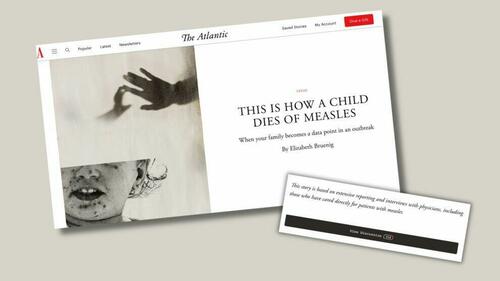
The Atlantic published a fictional story about a child's death from measles, written in the second person. The story, attributed to Elizabeth Bruenig, was presented with vivid detail. Initially, the piece lacked a disclaimer, causing confusion among readers and other journalists. NiemanLab's Laura Hazard Owen questioned the story's authenticity, sparking further investigation. The Atlantic's spokesperson initially claimed the story was based on a real account. Only after inquiries did The Atlantic add an editor's note clarifying the fictional nature of the story. The comments section of The Atlantic reflected readers' confusion about the story's true nature. Some readers, like Stuart Buck, claimed to immediately recognize the hypothetical narrative. The article's deceptive presentation has sparked ethical concerns about journalistic integrity. The lack of upfront disclosure led to misrepresentation and potential manipulation of readers' emotions. The controversy highlights the importance of transparency in storytelling and proper attribution of factual information. This incident underscores the responsibility of media outlets to ensure clarity and truthfulness in their publications.

zerohedge.com
zerohedge.com

RSS Hunter
2026-02-19