Axios
Follow
The budget deficit swells, while the cost of debt rises
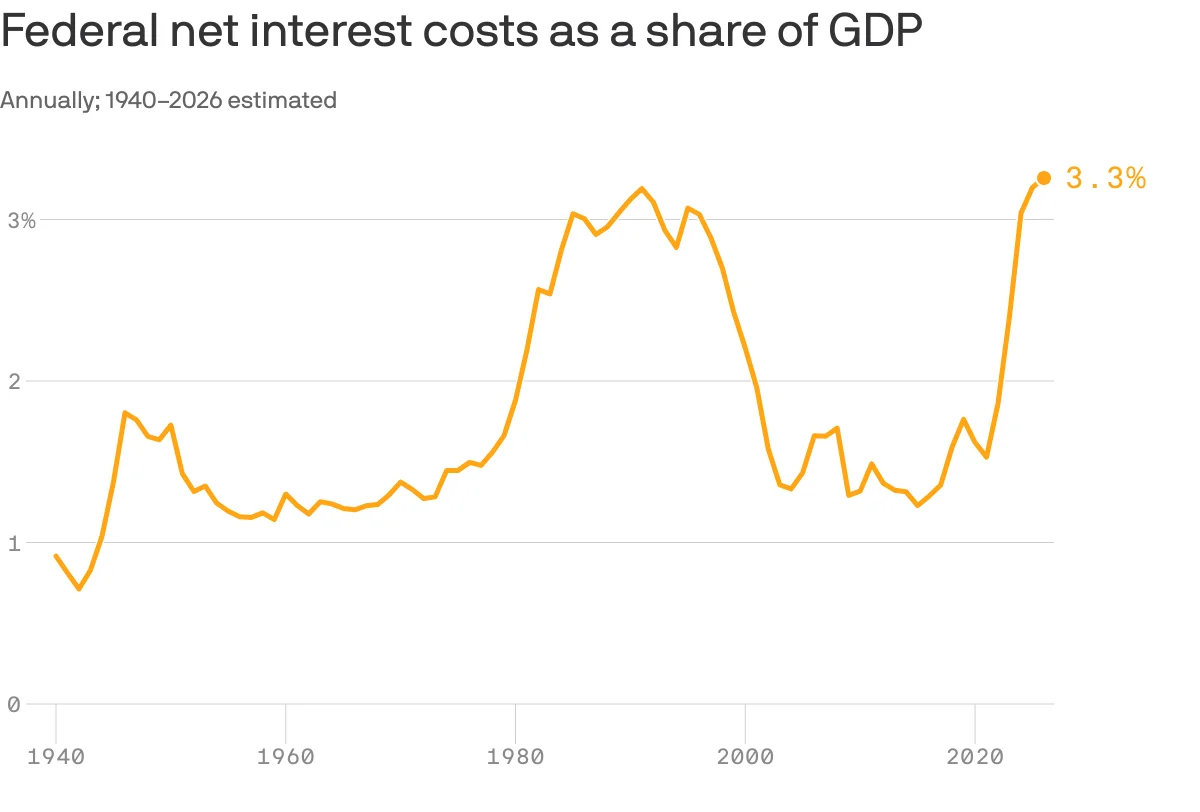
The U.S. budget deficit is projected to hit $2 trillion this fiscal year, the highest since 2021. This surge is significantly influenced by the escalating cost of servicing the national debt amid rising interest rates. Net interest payments on the national debt for fiscal year 2026 are estimated at $1.052 trillion. This amount surpasses the defense budget and ranks as the third-largest government expenditure after Social Security and Medicare. Federal net interest costs are expected to reach a record high of 3.3% of GDP in 2026. This situation reflects the consequences of extensive borrowing and higher interest rates experienced since inflation began to rise in 2021. The increasing interest payments exacerbate the deficit, necessitating further borrowing and straining the federal budget. U.S. interest costs previously neared these levels during George H.W. Bush's presidency, a period marked by bipartisan deficit reduction efforts including tax increases. The Clinton administration later achieved budget balance through a combination of tax hikes and spending cuts. Currently, there is a low appetite for similar austerity measures from either major political party. However, market pressures, referred to as "bond vigilantes," could potentially force such actions.