ZeroHedge News
Follow
The Great Migration: What The Dow-To-Gold Ratio Is Telling Us
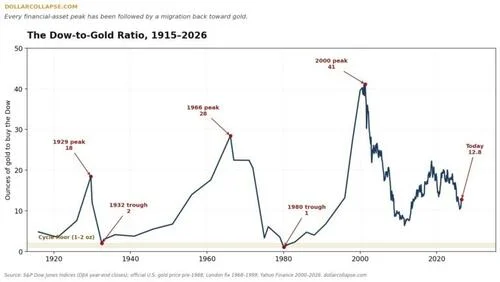
The Dow-to-gold ratio measures the valuation of the US stock market using gold as an honest, unprintable currency. Historically, this ratio indicates when the stock market is overvalued, as seen during past manias like 1929, 1966, and 2000. During these peaks, paper assets like stocks were highly prized relative to gold. Conversely, when the ratio is low, as in 1932 and 1980, it signifies that fear and sound money have priced the bottom.Every historical peak in paper asset value has been repriced lower in gold. These periods were characterized by a trust in promises over tangible assets, followed by a prolonged shift back towards commodities like gold. Although the trend since 2000 has been downward, it has involved significant reversals, not a simple decline. The historic floor for the Dow-to-gold ratio is between one and two ounces, with most of the potential move still to come.Currently, with the ratio around thirteen, the author believes it is a risky time to rely on traditional portfolios like 60/40. Stocks and bonds are seen as unreliable promise-keepers, and faith in the dollar's stability is considered risky due to government deficits and Federal Reserve actions. The author concludes that paper assets remain expensive while gold is patient, suggesting a need for assets that offer protection regardless of future economic paths.