Google Cloud Blog
Follow
The oracles of DeFi: How to build trustworthy data feeds for decentralized applications
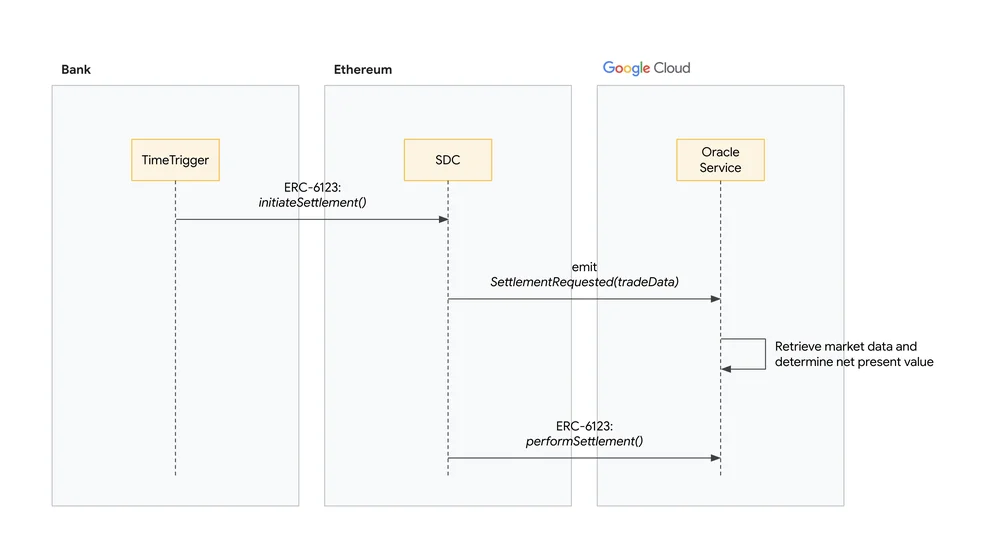
Distributed ledger technology, initially designed for censorship-resistant payments, is now being explored by financial institutions for its immutable and programmable nature. However, a significant hurdle for enterprise blockchain projects is the data integrity problem, especially when moving from test to production environments. DZ BANK and Google Cloud have developed a solution for securely feeding market data into DZ BANK’s Smart Derivative Contracts (SDCs). This collaboration addresses the need for trustworthy data delivery to blockchain applications, a critical factor as the technology matures and regulatory frameworks stabilize.The core value of DLT lies in its decentralized execution, enabling new financial products and automating complex processes. Yet, smart contracts require external, off-ledger data, such as price feeds, which must be accurate, untampered, and timely. The immutability of DLT transactions makes incorrect data potentially catastrophic, creating new attack vectors for those who manipulate off-ledger information. To combat this, a trustworthy oracle architecture is essential, ensuring data accuracy at the source, during transit, and reliable delivery.Google Cloud's secure infrastructure combined with DZ BANK’s vision for standardized financial protocols forms a robust solution. This pattern provides a blueprint for delivering timely, untampered data to any DLT system, establishing scalable standards for secure digital financial services. The SDC use case, validated on the Bundesbank’s DLT infrastructure, exemplifies how reliable oracle services are crucial for deterministic settlement and eliminating counterparty risk in OTC transactions. This solution employs layered security measures, including secure software supply chain practices, secure connections to data sources via Private Service Connect, and Trusted Execution Environments (TEEs) with attestation.Transport Layer Security further encrypts data during transmission, reinforcing its integrity. The architectural patterns developed for SDCs are applicable to other enterprise blockchain use cases, such as secure cross-chain asset transfers. This collaboration signifies that enterprise blockchain adoption is now feasible, with success depending on secure and reliable integration. The developed frameworks and patterns offer practical starting points for building trustworthy oracle systems that meet enterprise security standards.