Axios
Follow
The space warfare president
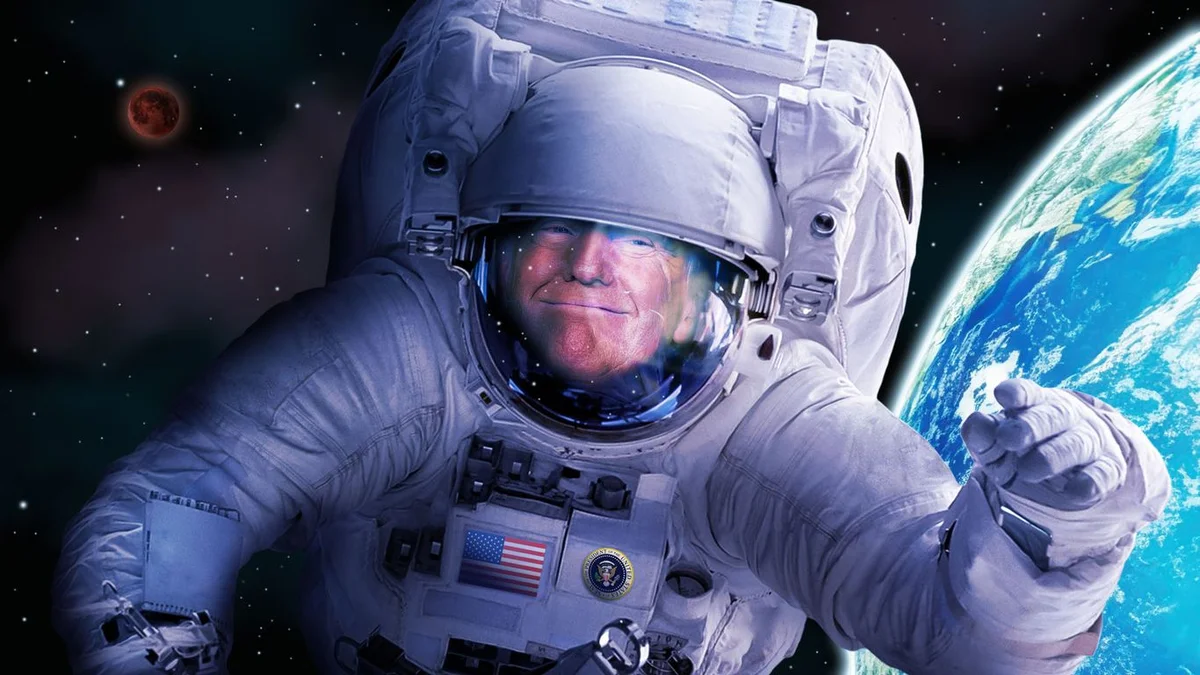
Donald Trump views future wars as being waged from space, prompting significant investment in this domain. He established the Space Force during his first term and initiated a $175 billion missile defense program in his second. Trump announced the relocation of Space Command to Huntsville, Alabama, aiming to enhance America's defense and dominance in space. He asserted that this move would help the U.S. regain its lead over China and Russia in space capabilities.The former president has prioritized space-based warfare, with Defense Secretary Pete Hegseth calling it the most important domain. This term, Trump launched the Golden Dome initiative, a space-based interceptor system intended to neutralize missile threats. While Trump believes this shield will be completed in three years, some experts express skepticism. The head of Space Command has openly advocated for weapons in space, indicating a shift towards more direct discussions on the topic.This focus on space militarization is supported by a general trend of increased military presence and prioritization in space. The Space Force is increasingly vocal about space being a warfighting domain, finding a receptive audience in the Trump administration. Space has historically been a locus of superpower competition, and the U.S. advantage is currently being challenged by China and Russia. Trump's earlier partnership with SpaceX underscored the importance of space on his agenda, an interest that persists. He issued an executive order promoting commercial space competition and the development of domestic defense systems. However, a proposed cut to NASA's budget, coupled with a lack of permanent leadership at the agency and the National Space Council, suggests a potential shift towards weaponization over exploration under Trump's renewed focus.