Axios
Follow
The Supreme Court's favorite branch of government is itself
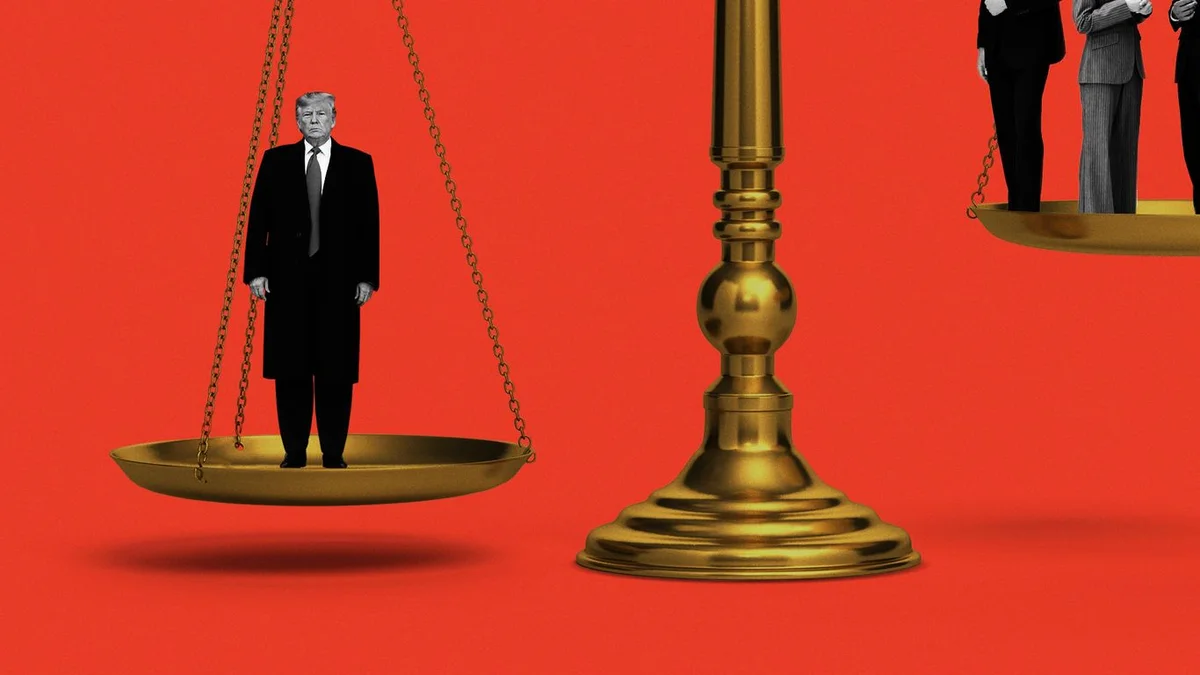
The Supreme Court's recent term saw a significant shift in power, with the court and the executive branch gaining influence at Congress's expense. This trend diminishes Congress's ability to regulate economic and social issues, transferring authority to the president and unelected justices. Key decisions this term weakened Congress's control over regulatory agencies, political spending, and voting district configurations. Conservative legal theories, particularly the unitary executive, which asserts the president's absolute control over the executive branch, gained prominence. The court demonstrated a willingness to overturn precedent and disregard lower court findings to achieve desired outcomes. This has led to a court increasingly untethered from traditional constraints. The FTC case exemplifies this, where the court selectively upheld and struck down parts of a law based on its interpretation of executive power. Challenges to voting maps that dilute minority representation became nearly impossible, and limits on political party spending were overturned. Congress's power of the purse was also challenged as the president was allowed to withhold congressionally appropriated funds. Much of this power consolidation is occurring through the court's shadow docket, allowing for rapid, less transparent decisions. Despite this trend, the president did not gain in every instance, with Chief Justice Roberts authoring rulings against some of Trump's key initiatives. The court's application of legal philosophies appeared inconsistent, employing textualism and originalism selectively to justify contradictory rulings. Concerns remain that fringe constitutional arguments, previously dismissed, are gaining traction, further shaping legal and political landscapes. Ultimately, Congress's power is waning, while the executive and judicial branches assert greater dominance.