Fast Company
Follow
This battery is powered by algae
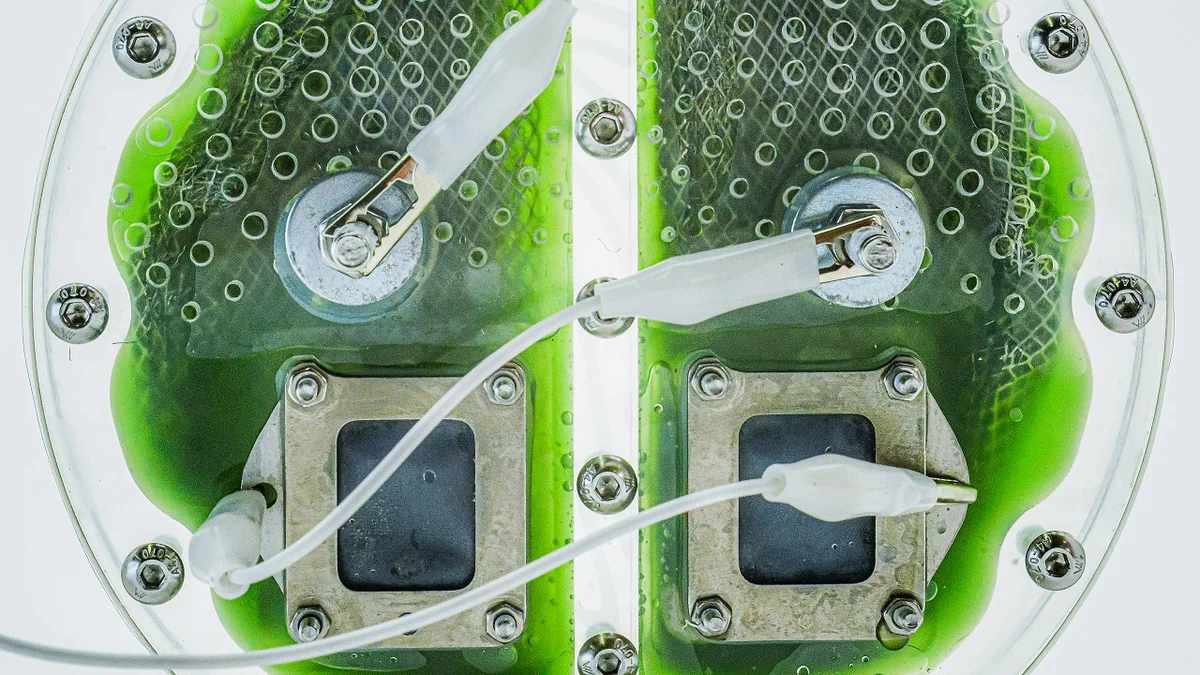
Lucia Giron's childhood fascination with glowing ocean water during a tropical storm inspired her work as a bio-designer. This early encounter with bioluminescence sparked her interest in the intersection of design and biology. Her recent project is an algae-powered battery, a sustainable alternative to alkaline batteries. This innovative battery features a transparent chamber containing cyanobacteria, encased in a metal frame.The design allows light penetration for photosynthesis and enables users to observe the biological process. The battery is capable of powering devices like digital clocks and temperature sensors. The concept originated from research on biophotovoltaics by Dr. Paolo Bombelli and Professor Chris Howe, who aimed to extract energy from photosynthesis. Giron and engineer Lifu Tan were brought in to develop a more consumer-friendly product from their existing prototype.The battery operates by capturing excess electrons released during the algae's photosynthesis. This method allows the algae to survive and continue their natural processes. The system is designed to enable the organism to thrive while still yielding electricity. In the future, this technology could lead to infinitely rechargeable batteries free from toxic chemicals.Designing the battery presented challenges, including creating a suitable environment for the algae to survive and preventing excessive sunlight exposure. The team also had to find materials that allowed gas exchange without evaporation. The battery's aesthetics incorporate a leaf pattern, referencing its biological origins. An earlier prototype has successfully functioned for over five years.The team is now focused on increasing the battery's voltage, current, and power density to support larger electronics. This technology holds potential for use in diverse environments and could significantly reduce the waste from disposable batteries, contributing to a greener future.