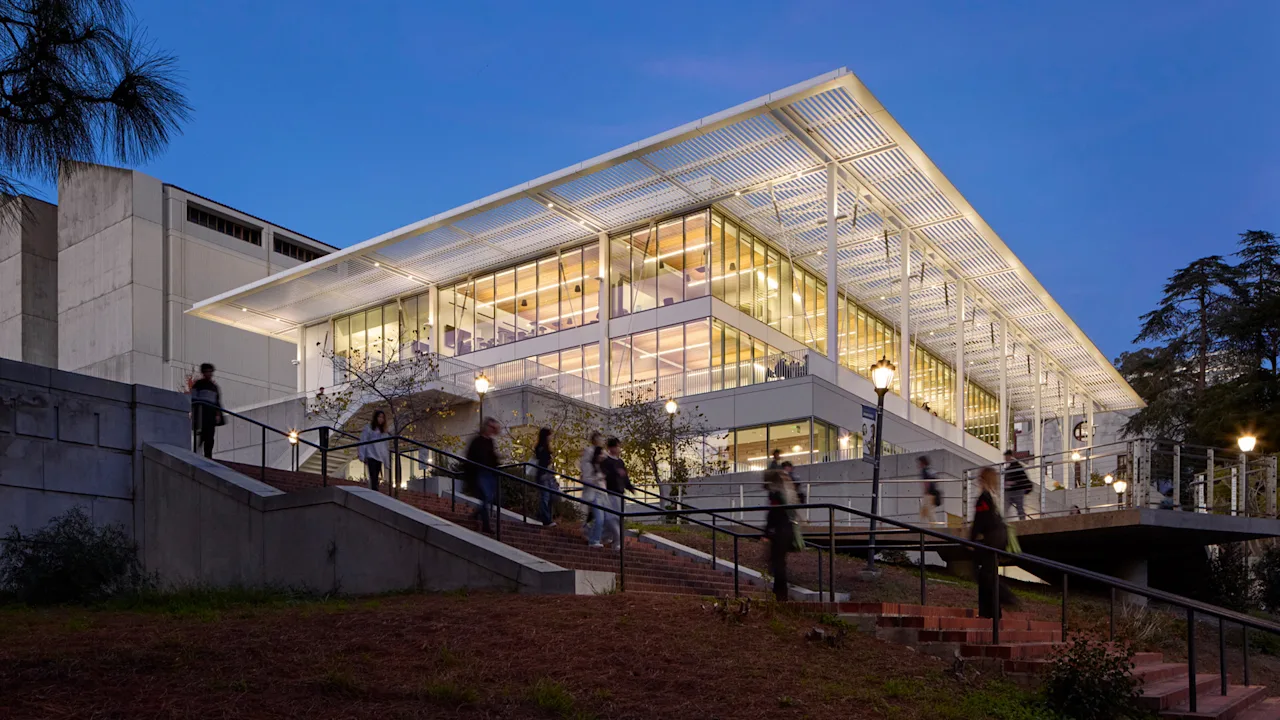
The UC Berkeley Grimes Engineering Center features 36 metal rods designed for earthquake resilience. These rods contain shape-memory alloy cables, enabling the building to return to its original shape after seismic activity. Developed by SOM, this innovative system allows for truly earthquake-resilient structures. The shape-memory alloy can bend significantly more than steel, behaving like a rubber band. The system's purpose is to ensure the building remains usable after an earthquake, unlike buildings with post-earthquake damage. This shape-memory alloy is new to architecture but is already used in other industries. The building is located near the Hayward Fault, a seismically active area, making it an ideal testing ground. The system's functionality is visible, demonstrating its engineering principles. The project is an adaptive reuse, built atop an existing structure, reducing its carbon footprint. Extensive testing and simulations show the shape-memory alloy tension rod system's effectiveness. The building is designed to withstand the region's largest expected earthquakes and return to its original shape.

fastcompany.com
fastcompany.com

RSS Hunter
2026-03-03
Create attached notes ...