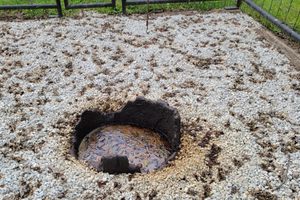
Thorla-McKee Well in Caldwell, Ohio
The United States is the world's largest producer and consumer of oil. Early Americans initially found petroleum to be a nuisance rather than a valuable resource. Before oil's prominence, salt was a highly prized commodity crucial for food preservation. Prospectors like Silas Thorla and Robert McKee in 1814 were digging for salt water in Ohio. They discovered a black, viscous substance, petroleum, floating on top of the brine. This oil was an impediment to their salt extraction efforts. While aware of its combustibility, they found it too smoky for lamp fuel. Instead, they bottled and sold it as "Seneca Oil," a supposed cure-all for various ailments. Their operations also involved the unintentional extraction of natural gas. This gas would occasionally cause explosions, sending brine water and oil high into the air. One of their wells is still present in Ohio, though petroleum was merely a byproduct of salt production. The Drake Well in Pennsylvania is recognized as America's first commercial oil well, drilled solely for crude oil.