Axios
Follow
U.S. economy's K-shaped gap narrows
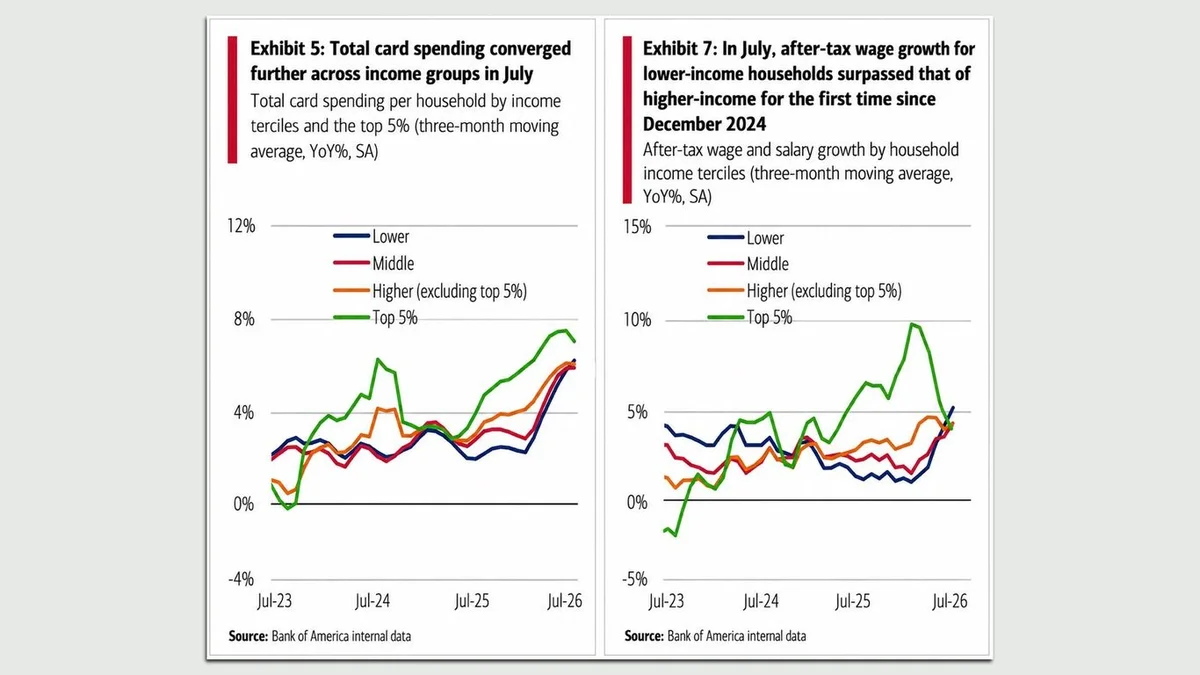
America's economy, previously characterized by a widening K-shaped gap where the wealthy spent significantly more than others, is now showing signs of this divide narrowing. This convergence is primarily driven by lower- and middle-income Americans catching up, rather than the affluent pulling back. Bank of America observes this trend, calling it the "great convergence," with spending and wage growth aligning across income levels since May. Data from Bank of America indicates that lower-income households are experiencing slightly higher spending growth and stronger pay gains. PNC reports a significant shrinkage in the spending growth gap between their richest and poorest account holders. This improvement is largely attributed to a stronger labor market, enabling more lower-income households to work and spend. JPMorgan Chase suggests the K-shaped narrative is no longer strongly supported by data. The White House is highlighting this shift, with Treasury Secretary Scott Bessent declaring the "K-shaped economy is over." However, despite closing economic gaps, consumer sentiment among lower-income individuals still lags behind higher-income groups. The very wealthiest Americans remain an exception, as their spending growth continues to outpace others.