Google Cloud Blog
Follow
Using BigQuery Graphs with measures for trusted agentic workloads
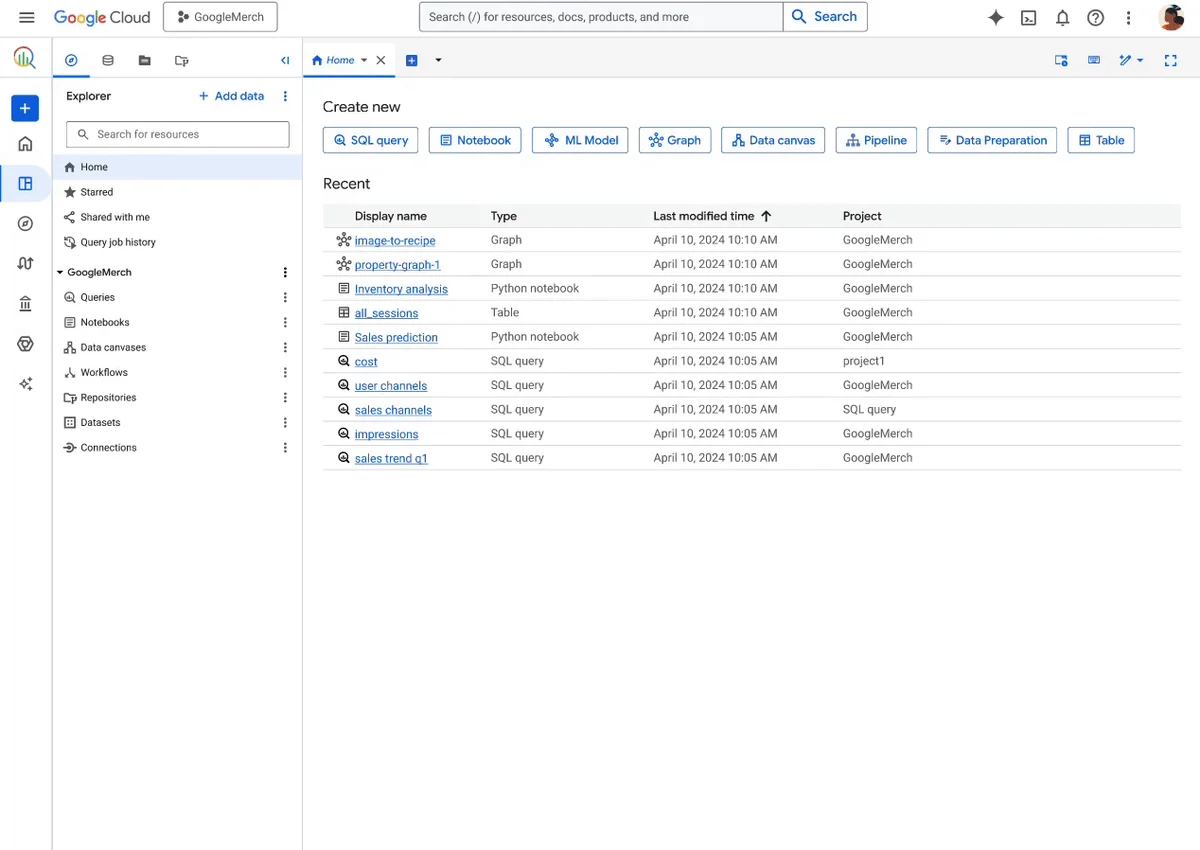
Enterprises face challenges when autonomous AI agents work with raw data tables, leading to inaccurate insights. Traditional data structures fail to capture real-world dependencies, hindering agents' ability to understand complex relationships. BigQuery Graph addresses this by enabling organizations to represent data as interconnected business entities. This new approach allows agents to reason across these relationships with greater precision.Relationships are crucial because blind reliance on flat tables prevents AI agents from understanding multi-hop business context. For example, an agent might report a sales drop but fail to identify the cause due to an inability to trace relational paths. This can lead to costly, irrelevant marketing campaigns and operational inefficiencies. Maintaining separate systems for relationships and metrics further exacerbates these issues, making runtime stitching slow and inconsistent.Measures in BigQuery Graph unify metrics with relationship mapping by allowing existing tables to be mapped to a property graph in-place, eliminating the need for ETL. This setup grounds metadata, calculates business performance, and uncovers the reasons behind performance changes. BigQuery Graph natively solves historical issues with SQL joins in graph traversals that caused incorrect aggregations. Data modelers now define measures within the Property Graph DDL.The engine resolves graph paths before evaluating metrics using standard SQL and the AGG aggregator, ensuring agents intelligently combine analytical tools. Tools like a visual graph modeler and conversational analytics integration within BigQuery Studio democratize graph intelligence. Conversational analytics enables natural language interaction, translating queries into precise graph-aware SQL. Native Looker integration ensures business metrics reside at the data layer, providing unified semantics and avoiding fragmented logic. This integration allows for database-managed or Looker-managed models, ensuring consistent KPIs through Git-based version control and CI/CD workflows.