Axios
Follow
Voters face uneven AI deepfake protections
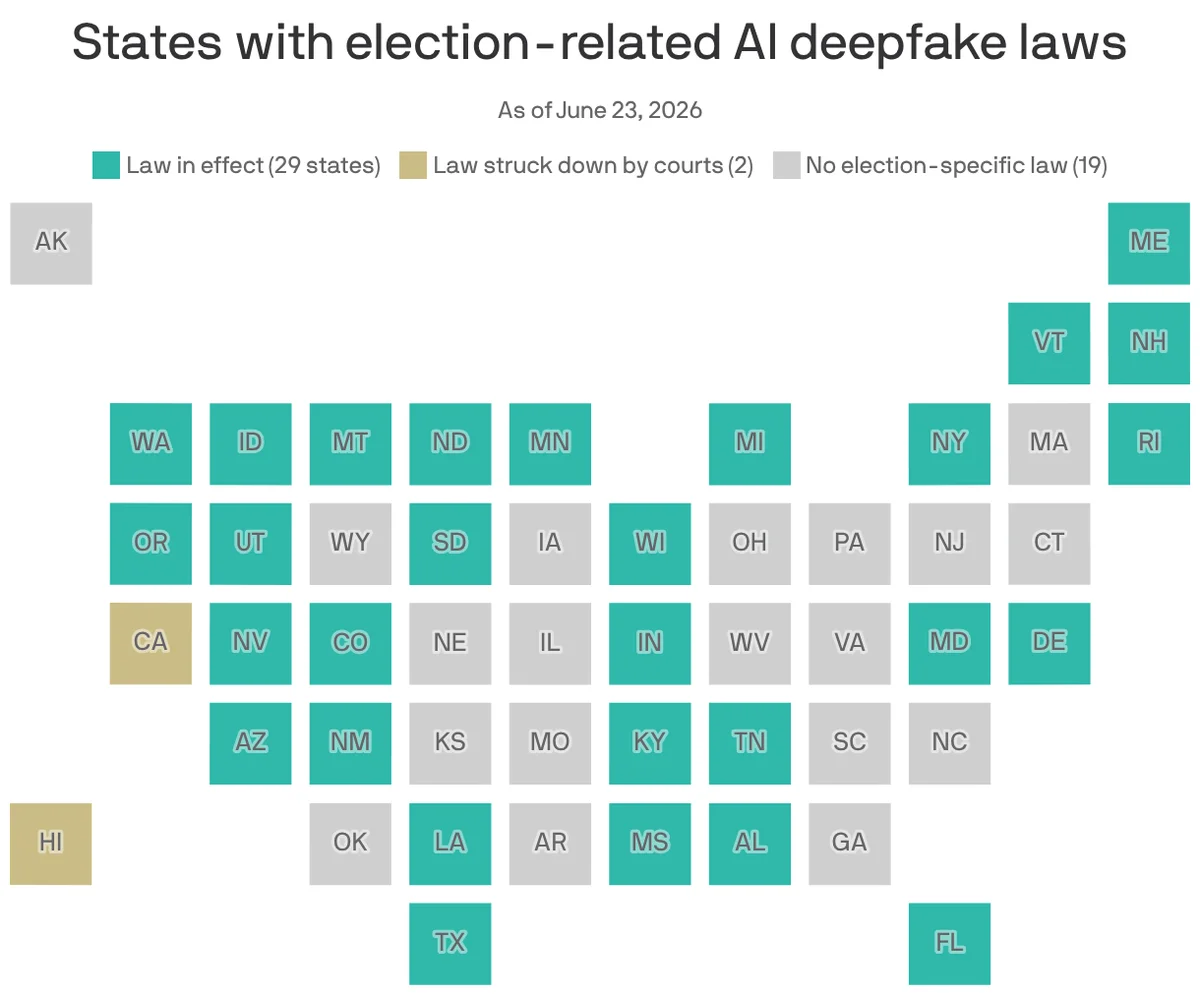
American voters will face a patchwork of state laws regarding AI deepfakes in elections this year. Twenty-nine states have enacted laws addressing political deepfakes, while two states, California and Hawaii, have had their laws overturned by courts. Some states, like Minnesota and Texas, ban deepfakes for a period before elections, while Maryland has a year-round ban. Many other states require disclosures when AI is used in political advertisements. Colorado and Utah demand more specific information about the deepfake's origin and creation. California and Hawaii are pursuing new strategies, with California's AI Transparency Act requiring disclosure of AI-generated images and Hawaii's law prohibiting deepfakes in ads without consent. At the federal level, there is no uniform standard for election deepfakes. Congress's initial AI deepfake legislation, the Take it Down Act, focuses on non-consensual intimate imagery, not directly election content. Enforcement of this existing law is expected to be challenging, potentially requiring further litigation. House Democrats plan to introduce legislation targeting election deepfakes if they win control next year. Ultimately, states have taken the lead in regulating AI in elections, creating a varied landscape for voters nationwide.