UX Collective | Medium
Follow
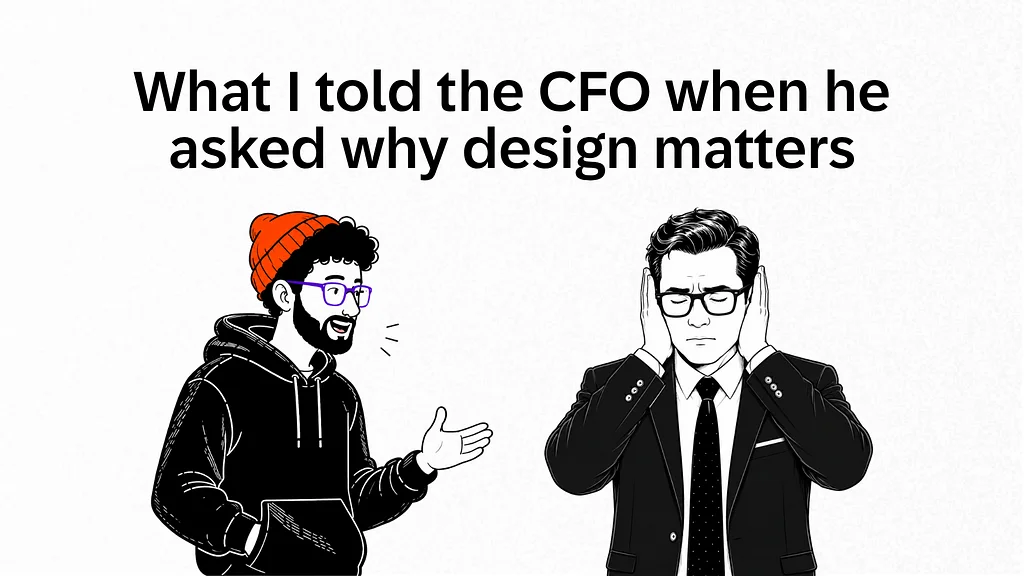
What I told the CFO when he asked why design matters
To effectively sell design and demonstrate its impact to business and finance leaders, designers must speak their language of numbers and business outcomes. A key strategy is to hold design investments to the same standards as any other, evaluating them by payback period and rate of return. For instance, user research can shorten iteration cycles, avoid rework, and yield significant ROI, as shown in a Forrester study. Treating conversion as revenue already paid for, by optimizing checkout design, directly impacts a company's bottom line.By fixing checkout design issues, e-commerce sites can significantly lift conversion rates, recovering billions in lost orders. User research acts as capital protection, identifying and preventing investment in unworkable product ideas early on. Developing a design system, with reusable components and patterns, leads to compounding savings by enabling teams to build once and deploy everywhere. This reuse translates into measurable time and cost savings that finance departments can easily verify.When features become commoditized, design becomes the differentiator that grants pricing power, allowing companies to charge more and foster customer loyalty. By focusing on user experience, design protects product prices in a competitive market. Ultimately, designers should frame their work using financial terms like payback, conversion, validation, reuse, and pricing power. Building trust with finance involves proactive communication and regularly reporting design metrics in business terms. While monetary value is crucial, the human value of design, such as user satisfaction and loyalty, is also well-received when presented alongside financial impact.