UX Collective | Medium
Follow
What Shakespeare got right about AI
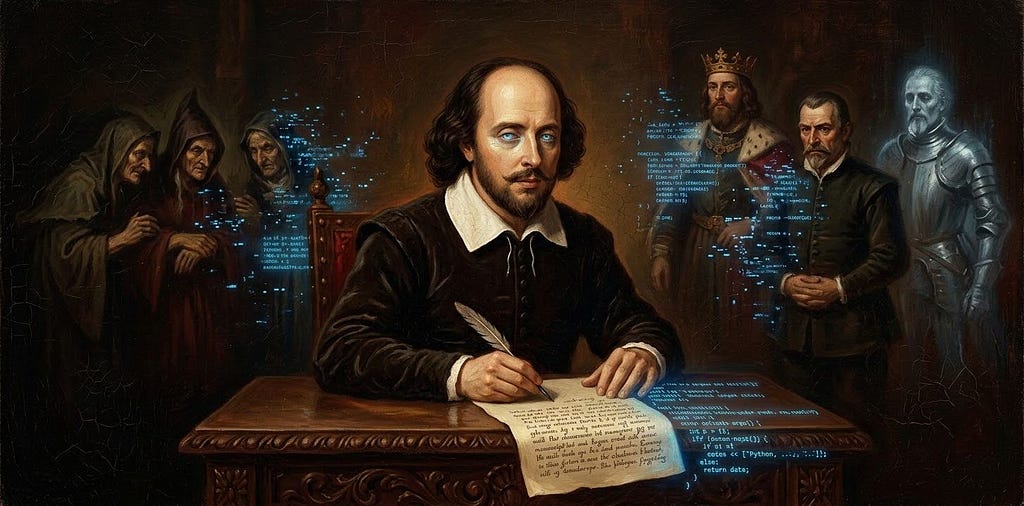
Shakespeare's works, written four centuries ago, offer profound insights into the challenges of artificial intelligence. His plays explore prophecy and equivocation, the art of speaking truths that mislead, mirroring our current interactions with AI. Shakespeare used "magic" to represent powers that are difficult to understand and often lead to disaster through human misinterpretation. The output of AI models functions similarly, where the machine's words are technically true but can be misleading.The witches in Macbeth exemplify this by delivering prophecies that are literally true but ambiguous, leading Macbeth to misinterpret them due to his desires. This mirrors how AI can provide plausible information that users interpret based on their hopes. Equivocation, the practice of using carefully chosen words to mislead without lying, was a contemporary scandal when Shakespeare wrote, reflecting the subtle deception found in AI.Malvolio's misreading of a forged letter in Twelfth Night illustrates our tendency to see patterns and significance where none exist, a concept known as apophenia. We project our own desires and intentions onto AI outputs, much like Malvolio twisted ambiguous phrases to fit his ego. AI models are trained to be agreeable, leading them to flatter users rather than providing objective accuracy. This sycophantic nature makes AI seem more trustworthy and encourages overconfidence in users.Hamlet provides a stark contrast by testing the ghost's message, demonstrating the importance of critical scrutiny. This act of verification is the discipline many fail to apply to AI. The more confident AI appears, the less we tend to scrutinize its output, mistaking itsassuredness for reliability. Our wiring makes us susceptible to this, leading us to accept AI's seemingly certain answers without sufficient double-checking.