UX Collective | Medium
Follow
What Shakespeare got wrong about AI
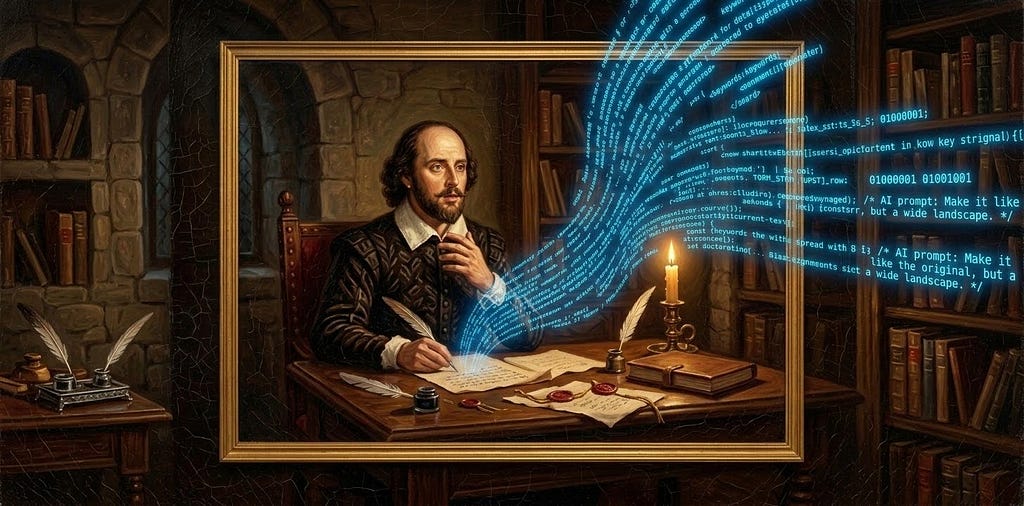
Shakespeare's magic always had an off switch, a moral order, and someone in charge, unlike the AI we are building today. His characters could summon magic and then shut it down, with potions fading and storms clearing. This magic answered to a conscience and moral order, where the guilty were punished and the wronged were made whole. Someone was always behind it, whether a witch, a fairy, or a duke with a plan. The crucial difference between Shakespeare's magic and our AI is the absence of an off switch, an ending, a conscience, and a guiding hand. Shakespeare understood human nature, which is why he is more insightful about AI than science fiction. Science fiction focuses on the physical manifestation of machines, while Shakespeare explored human behavior in the face of powerful, unknown forces. In The Tempest, Prospero controls everything and chooses to end his magic, embodying a controllable power. Similarly, in Fantasia, Mickey's uncontrolled magic requires a master to restore order. Norbert Wiener used the sorcerer's apprentice fable to warn about machines moving too fast for us to control. Today's AI creators admit they don't fully understand their creations and cannot switch them off. Shakespeare assumed a Prospero, someone who understood and could end the magic, a comforting assumption that no longer holds true. Our magic has no master and no control, leaving us like Mickey in the rising water. Shakespeare's magic always knew how to leave, wearing off by morning, unlike AI which persists indefinitely. The release of open-weight AI models cannot be recalled, making them impossible to contain once released. Shakespeare's characters always returned to reality, but with AI, there is no home to return to. Finally, Shakespeare's magic kept score, upholding a moral order, whereas AI is a power that keeps no score.