UX Collective | Medium
Follow
What Star Wars got right about AI
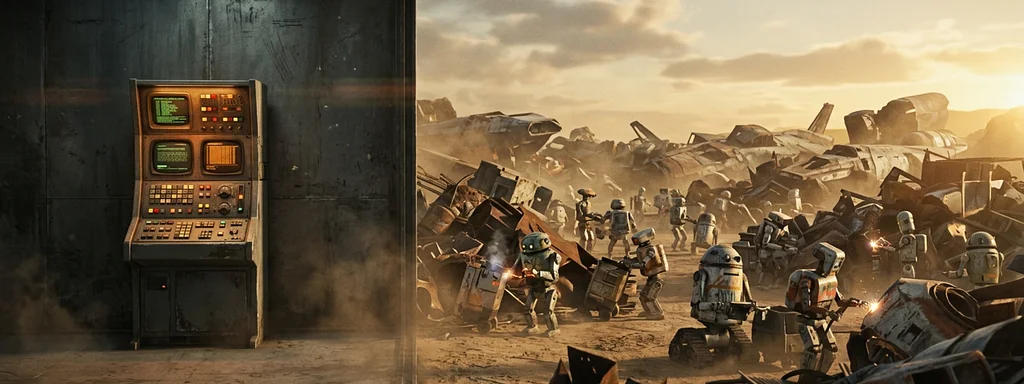
Science fiction has given us two competing visions of artificial intelligence, the lonely oracle and the crowded junkyard, with the latter being the one that has come true. The Star Wars franchise imagined a future with cheap, specialized, and ubiquitous machines, which is similar to how artificial intelligence is being deployed today. In contrast, the Star Trek franchise envisioned a single, all-knowing computer that is not reflective of the current state of AI. The diffusion of machine intelligence, as seen in Star Wars, is winning, with AI becoming ordinary and embedded in daily life. A working machine is one that nobody stops to admire anymore, and this is evident in the way we use appliances and tools without being amazed by their capabilities. The measure of a technology's arrival is not wonder, but how fast it becomes part of our lives, and AI is passing this test with its widespread adoption in various business functions. The numbers back up the junkyard vision, with 88 percent of organizations using AI in at least one business function, and the trend is towards more specialized and bounded tools. The productive shift in AI is not towards a single, general-purpose engine, but towards small, specialized tools that are embedded in various tasks, and this is reflected in the way AI is being deployed in industries. The highest compliment a smart feature can earn is that no one calls it smart, and this is evident in the way we use translation services and other AI-powered tools without being amazed by their capabilities. As AI becomes more pervasive, it is essential to design systems that are transparent, accountable, and trustworthy, and to consider the ethical implications of creating machines that can act on our behalf.