Fast Company
Follow
Why driverless trucks won’t be taking over highways just yet
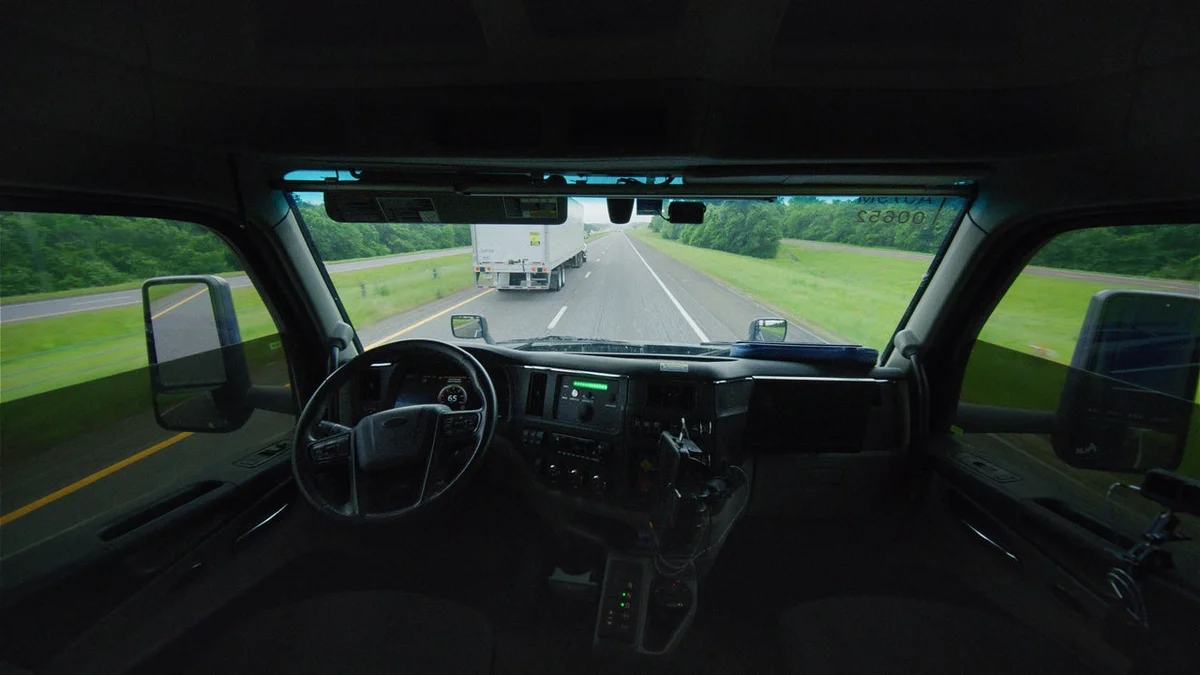
Driverless trucks powered by artificial intelligence are being tested on limited routes to assess their potential benefits. These automated trucks could improve safety by reducing crashes and enhance fuel economy through optimized driving. They also have the potential to shorten transit times and alleviate the ongoing driver shortage. However, significant challenges remain, including operation in variable weather and complex road conditions like construction zones. Sensors and cameras crucial for autonomous vehicles struggle with rain, snow, and unclear road markings. Despite these difficulties, some companies are testing on simpler highways and industrial sites. The development of fully autonomous trucks faces setbacks, with some companies scaling back or exiting the market. A more immediate and realistic future involves a symbiotic relationship between human drivers and automated trucks. Drivers would handle complex "first and last mile" segments, while automation manages highway driving. Effective human-machine interfaces will be essential for seamless transitions and driver awareness. Potential biases, such as automation bias where drivers over-rely on the system, and algorithmic bias in sensor recognition, need careful consideration. While the long-term vision is driverless operation, widespread implementation is not expected in the near future. Collaboration among manufacturers, developers, regulators, and drivers is crucial to realizing the benefits of this technology.