DEV Community
Follow
Why MCP (Model Context Protocol) is Lowkey the REST API for Autonomous AI Agents
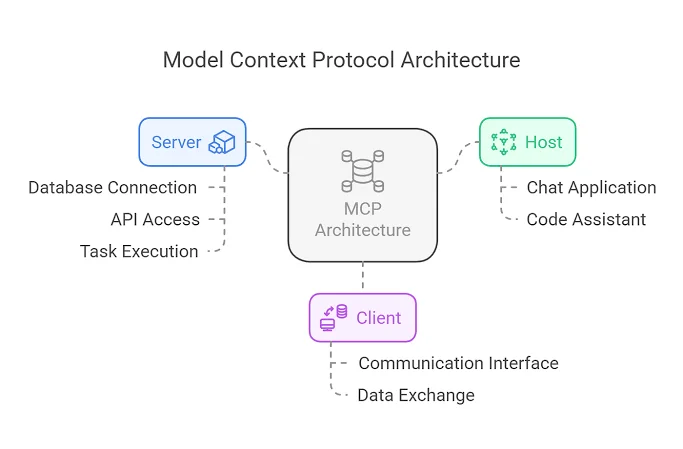
Building custom AI agents in production was previously complex, involving extensive "glue code" to connect various systems. This approach was messy, unscalable, and reminiscent of early microservice chaos due to customized function-calling schemas. The Model Context Protocol (MCP) now offers a revolutionary solution likened to a universal port for agentic AI. MCP standardizes communication between AI models, host applications, and local/remote tools, eliminating the need for hardcoding specific function-calling schemas into LLM prompt contexts. It introduces a Client-Server Architecture where the MCP Host (LLM application) connects to an MCP Server. The MCP Server is a lightweight process that exposes tools, resources, and prompts via standard JSON-RPC 2.0 transport. This allows the host to access available tools and their usage instructions without needing to understand the underlying database structure. A simple Python example demonstrates building an MCP server to safely inspect database schemas. Key benefits include "zero prompt drift" as docstrings automatically populate tool descriptions, and a "pluggable architecture" allowing the same code to work across different AI hosts. Production considerations involve robust security boundaries, managing context window pollution, and optimizing latency with appropriate transport methods like stdio or SSE.