Axios
Follow
Why Treasury yields are ripping higher
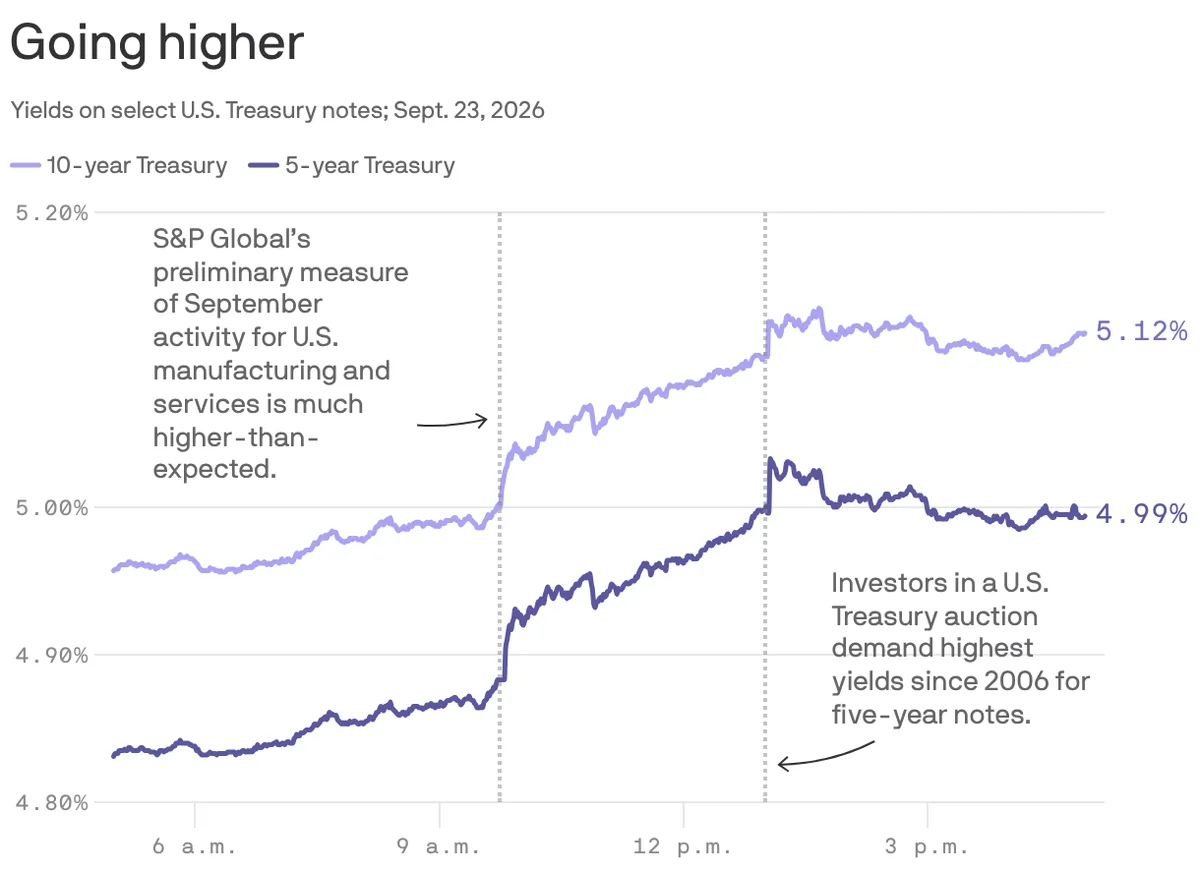
Treasury yields are reaching historic highs, with the 30-year Treasury bond hitting its highest level since 2004. This significant selloff in bonds accelerated following a strong early report on the September economy. The 30-year yield surpassed 5.44%, and the 10-year yield reached 5.13%, marking a substantial increase. This surge is driven by a combination of robust economic activity and persistent high inflation. Increased borrowing related to data centers is also intensifying competition with the U.S. Treasury for investor funds. A key factor in the recent yield spike was a survey indicating booming manufacturing and services sectors, but also soaring prices paid by companies. High inflation is particularly detrimental to bond investors as it diminishes the value of their returns. Consequently, financial markets are now pricing in a greater likelihood of Federal Reserve rate hikes to combat inflation. Underlying these inflation concerns is the potential impact of a U.S. diesel export ban, which could paradoxically increase prices of other refined products. Analysts warn that such a ban might disrupt refinery operations and lead to broader price increases. These mounting inflationary pressures present a challenge for both politicians and economic policymakers.