ZeroHedge News
Follow
Why Washington Is Challenging The International Criminal Court
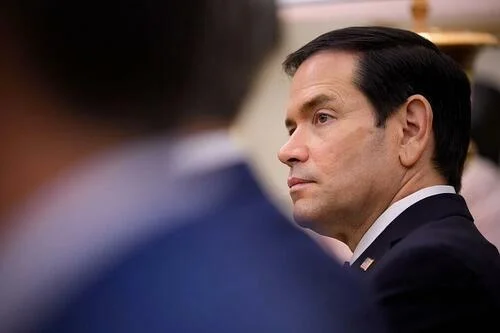
Secretary of State Marco Rubio announced a "whole-of-government" campaign to challenge the International Criminal Court (ICC), prompting global discourse. The Trump administration is pressuring allies to reconsider their support for the ICC, advocating for expanded sanctions against officials and asserting the Court's lack of authority over sovereign citizens. This stance is seen by some as unilateralism but by others as prioritizing "America First."At its core, the issue questions whether a nation's own institutions or an international tribunal holds ultimate authority to judge its citizens. Every U.S. administration since the ICC's inception has rejected its jurisdiction over American personnel. The ICC, established in 2002 by the Rome Statute, aims to prosecute individuals for grave crimes when national courts fail.While the U.S. has supported prosecuting war criminals in other contexts, it has consistently refused to accept the ICC's criminal jurisdiction over American citizens without consent. President Clinton signed the Rome Statute but withheld it from Senate ratification due to constitutional concerns, a position reinforced by subsequent administrations. The current controversy stems from the ICC's assertion that it can prosecute citizens of non-member states if the alleged offense occurs within a member state's territory.This "global overreach" raises concerns about the politicization of international organizations and the expansion of their jurisdiction beyond initial agreements. Senator Daniel Patrick Moynihan's 1975 warning about the U.S. entering an era of "opposition" within international institutions remains relevant. He argued that these bodies, when exceeding their authority, invite resistance from democratic governments.The core dispute is not about prosecuting war crimes, but whether an international court can unilaterally define the limits of its own authority. American constitutional tradition dictates that treaties bind only consenting nations, and the Senate never ratified the Rome Statute. This lack of consent means the ICC's judges are not accountable to the American electorate, raising profound concerns about democratic accountability.Other major democracies, like India, also decline to join the ICC, sharing concerns about international institutions acquiring undelegated powers. Dismissing these sovereignty concerns as "ultra-America-first nationalism" overlooks a constitutional principle uniting U.S. administrations for over two decades. The U.S. never consented to placing its citizens under ICC jurisdiction.Rubio's position, far from extremist, reflects a long-standing understanding that the legitimacy of law relies on the consent of the governed. This is a serious constitutional issue, not merely a political skirmish.