UX Collective | Medium
Follow
You already know how to make it accessible
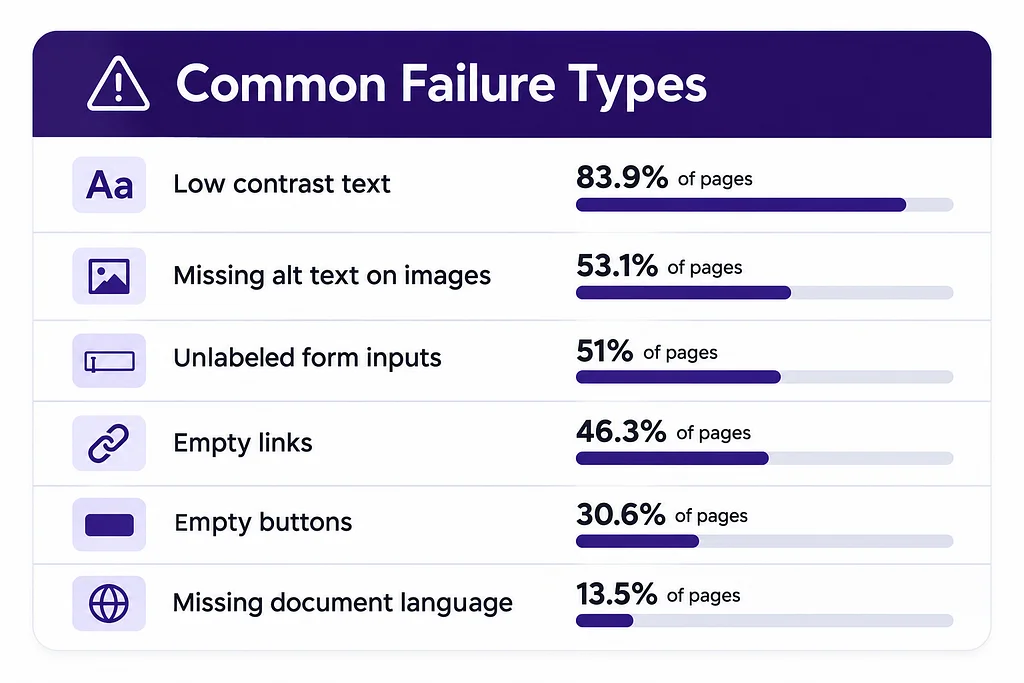
Recent WebAIM data reveals that a vast majority of websites, nearly 96%, have accessibility errors. Alarmingly, the most common failure types have remained unchanged for years, indicating a persistent issue. These common failures, such as poor contrast, missing labels, and unclear interactive elements, are not complex technical hurdles. Instead, they directly correlate with fundamental design principles that designers are already taught. Accessibility standards are essentially a legal and technical translation of these established design practices. The gap lies not in knowledge, but in understanding the vocabulary that connects design principles to accessibility requirements. Designers possess the foundational skills to address these issues, requiring only a shift in perspective. They need to ensure visual hierarchy is implemented with semantic markup and contrast ratios are treated as core design constraints. Writing descriptive link text and meaningful alt text are also essential design tasks, not separate accessibility obligations. Addressing these issues early in the design phase is significantly more cost-effective than rectifying them post-launch. Designers are uniquely positioned to influence accessibility because they make critical decisions about layout and content before coding begins. Therefore, designers should view accessibility as an extension of their existing skillset, treating it as another crucial design constraint. Content designers also play a vital role through plain language, which benefits users with cognitive disabilities and non-native speakers. The increasing use of AI-generated text makes clear, concise writing more critical than ever for accessibility.