Fast Company
Follow
‘You Can See Everything’ perfectly captures what a decade of post-truth has done to us
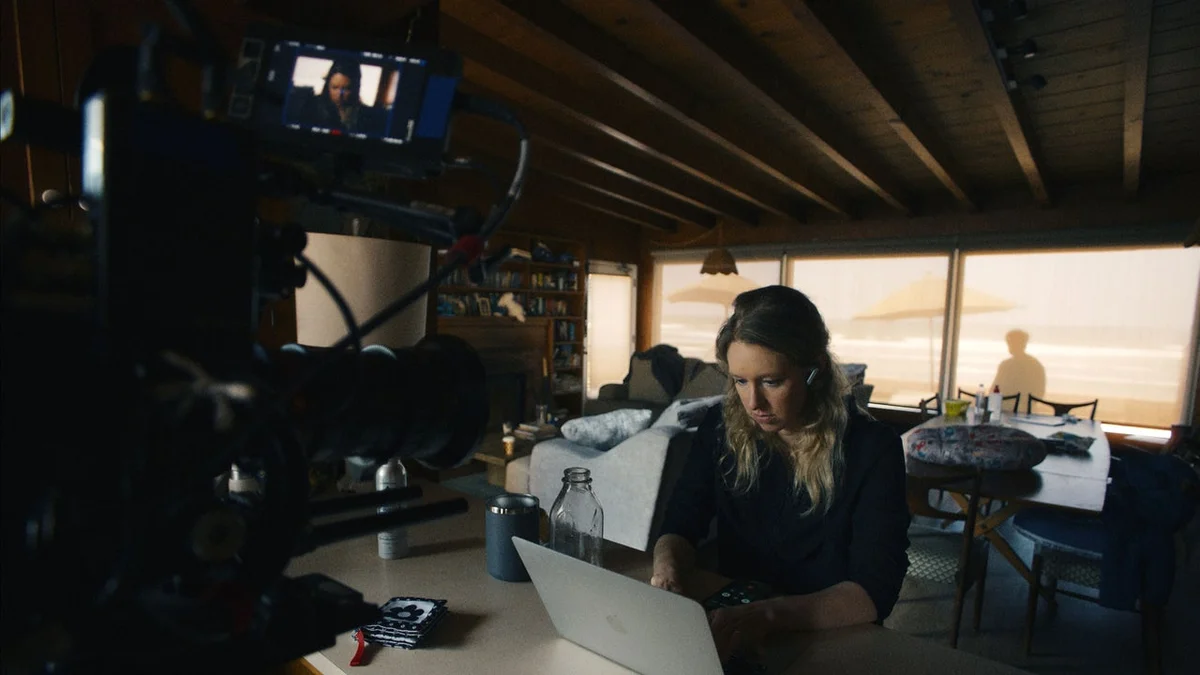
You Can See Everything, a documentary about disgraced Theranos CEO Elizabeth Holmes, offers a compelling theatrical experience. Directed by Nathan Fielder and Lance Oppenheim, the film features moments that evoke strong audience reactions. One particularly resonant scene involves Fielder's astonished reaction to Holmes's dishonesty, uttering a disbelieving "Liz, what?!" This moment is both humorous and cathartic, reflecting a widespread craving for sincere reactions to blatant falsehoods in a post-truth era.The film, shot in 2023 as Holmes awaited her prison sentence, features Fielder interviewing her and her husband, Billy Evans. Fielder, known for exploring business scams and authenticity in his TV shows, does not aim to prove Holmes's dishonesty, which is already established. Instead, he seeks to categorize the nature of her dishonesty, whether it's sociopathic or rooted in a disconnect from reality. His refusal to accept Holmes's narrative mirrors the public's struggle with pervasive unreality in recent years.The post-truth era, marked by a disregard for factual accuracy, has seen powerful figures confidently push false narratives without consequences. This "performance of total confidence" is prevalent in mass communication, particularly in the tech world. Tech executives frequently make exaggerated claims about an inevitable AI future, claiming urgency or transformative changes like the need for universal basic income. These assertions, often designed to flatter their products, rarely face Fielder-like skepticism.Pop culture often depicts clear comeuppances for liars, but Holmes's fall is a rare exception in a world where powerful people can impose their version of reality. The AI industry, deeply intertwined with the U.S. economy, allows its leaders to make extraordinary claims with insufficient pushback. CEOs like Dario Amodei and Sam Altman make unsubstantiated doomsday predictions without detailed explanations, expecting to be taken at their word.Conversely, Jensen Huang dismisses concerns about AI-driven job losses with optimism rather than data. Elon Musk, despite repeatedly making unfulfilled promises, faces no significant consequences for his false interpretations of reality. Even in court, Musk avoids admitting previous lies, perceiving questions as deceptive.The film suggests that the most effective deception doesn't demand belief in a lie, but rather destroys the belief in a definitive truth. Fielder embodies the exhaustion of constantly being fed falsehoods, representing those who wish to confront dishonest figures. While You Can See Everything doesn't elicit a full confession from Holmes, Fielder's "Liz, what?!" moment provides a powerful vicarious experience of challenging a famously dishonest individual.