RSC | Chem. Commun. latest art... Note

RSC | Chem. Commun. latest articles

“Chemical Communications” journal published by the Royal Society of Chemistry. This journal focuses on urgent communications of outstanding significance across the chemical sciences. It features a double-anonymized peer review process and has an impact factor of 4.3. The journal is indexed in MEDLINE and aims for a time to first decision of 24 days. The website also provides access to recent articles, published issues, and themed collections.

Thread Of Notes

PCN-224-Pt Nanozyme for Dual-Mode Detection of Acetylcholinesterase via LMB-PEG

Chem. Commun., 2026, Accepted Manuscript DOI: 10.1039/D6CC02043G, Communication Weiyi Bai, Ling Teng, Xingzhi Yu, Qing Li, Huiing Tan, Yongchao Yao, Shufen Li, Limei Zhang, Hao Bai, Imran Shakir, Weihua Zhuang, Yuan Yang, Xuping Sun, Wenchuang Walter Hu Alzheimer's disease (AD) is closely associated with cholinergic dysfunction, with acetylcholinesterase (AChE) as a key biomarker. Here, a dual-mode colorimetric/fluorescent platform based on PCN-224-Pt nanozyme and LMB-PEG is developed, enabling...

Twisted Graphene-Like MOFs for Efficient CO2 Photoreduction

Chem. Commun., 2026, Accepted Manuscript DOI: 10.1039/D6CC02843H, Communication Hui Zhang, Zhenhao Peng, Wenyu Yuan, Boda Li, Quan-Guo Zhai Herein, a series of twisted graphene-like MOFs (TGL-MOFs) with controlled interlayer twisted angle were constructed. Benefiting from the optimized electronic structure and improved charge separation ability, the TGL-MOF demonstrated switchable...

Bioorthogonal tuning of nanosurface opsonisation via click coupling of a complement fusion protein inhibitor

Chem. Commun., 2026, Accepted Manuscript DOI: 10.1039/D6CC00733C, Communication Sarah Jacques, Hanmant Gaikwad, Jemma Pillatzke, Seyed Moein Moghimi, Dmitri Simberg Complement opsonisation contributes to immune clearance of nanopharmaceuticals, but complement activation has some undesirable effects. Herein, we show that tethering the fusion complement receptor 2-complement receptor 1 (CR2-CR1) regulator to...

A Synthetic Protein Plug for Assembly of Bio-nano-hybrids with Direct Electron Transfer Powered Photobiocatalysis

Chem. Commun., 2026, Accepted Manuscript DOI: 10.1039/D6CC02565J, Communication Zi-Jie Lu, Jia-Qi Zang, Xing-Ming Zhao, Nan Ding, Li-Xin Dai, Tian-Yu Zhu, Junying Liu, Chong Sha, Yang-Chun Yong A "plug-and-play" biohybrid assembly strategy was established by reprogramming cell membrane proteins into "synthetic protein plugs". This approach covalently confined carbon dots onto Shewanella oneidensis within the optimal electron tunneling...

Microwave assisted Gd(OH)₃-MXene Nanocomposites for High Power Density Solid State Supercapacitor Applications

Chem. Commun., 2026, Accepted Manuscript DOI: 10.1039/D6CC02461K, Communication Prasad Eknath Lokhande, Dadaso D Mohite, Bandar A Al-Asbahi, Amol S Vedpathak, Deepak Kumar, Radhamanohar Aepuru, Udayabhaskar Rednam A gadolinium hydroxide) and MXene was synthesized through a microwave assisted route for supercapacitor electrode. An all solid state supercapacitor Gd–MX//AC delivered an energy density of 25 Wh kg⁻¹ and...

CeF₃/Co₃O₄ Heterojunction Enabled Reconstruction Regulation for Selective and Efficient Electrocatalytic Cleavage of Lignin Cβ–O–4 linkage

Chem. Commun., 2026, Accepted Manuscript DOI: 10.1039/D6CC01872F, Communication Jialin Fan, Jingxuan Zhang, Wenjing Bai, Zhaoling Ma, Liyuan Gong, Yongzhuang Liu, Shuo Dou The efficient cleavage of Cβ–O–4 linkage is crucial for the high-value utilization of lignin. In this study, we developed a CeF3/Co3O4 heterojunction catalyst. The heterojunction facilitated the reconstruction to generate...

Modulating the coordination environment of Electrochemical Catalysis for enhanced catalytic performance

Chem. Commun., 2026, Accepted Manuscript DOI: 10.1039/D6CC01802E, Review Article Xiangwen Liu, Jingjing Jiang, Shihua Jia, Donghao Xu, Tingting Chao, Lei Li, Jing Li, Xinqi Chen, Wei Wang, Jingui Duan Electrochemical catalysis serves as the cornerstone for a sustainable future, enabling clean energy conversion and advancing green chemical synthesis. Understanding and designing catalysts helps us develop more efficient catalysts. This...

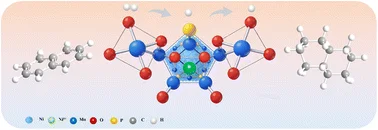
In-Situ Construction of MoO2 /In2O3 Heterostructures to Accelerate Reaction Kinetics for Electrocatalytic Nitrogen Reduction

Chem. Commun., 2026, Accepted Manuscript DOI: 10.1039/D6CC02345B, Communication Yuhang Cheng, Jianlong Chen, Hangning Liu, Qi Wang, Manting Tang, Xuyun Guo, Valeria Nicolosi, Linghao Su, Jie Wang Electrochemical nitrogen reduction to NH3 offers a sustainable alternative to the energy-intensive Haber-Bosch process, but suffer from sluggish kinetics. Herein, we report MoO2/In2O3 Heterostructured nanorod achieving a high NH3 yield...

Intermediate Single Crystal Trapping of COF-300 via Organic Lewis Acid Catalysis

Chem. Commun., 2026, Accepted Manuscript DOI: 10.1039/D6CC02265K, Communication Tian Wang, Mingyang Fu, Hao Wang, Cheng Yi, Duyong Chen, Qiang Liu, Yin-Shan Meng, Jiyun Hu, Tao Liu A sterically hindered organic Lewis acid catalyst B(C6F5)3 was utilized to regulate the reaction kinetics of COF-300 synthesis, enabling direct observation of the intermediate single-crystal growth stage. This approach establishes...

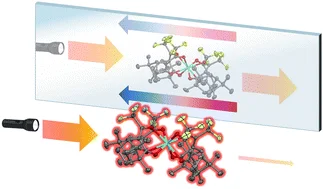
Intermolecular charge transfer in electron-deficient MOFs enhances NIR absorption for photothermal conversion and water evaporation

Chem. Commun., 2026, Accepted Manuscript DOI: 10.1039/D6CC02849G, Communication Hao Zeng, Ci Kong, Jianqi Xiong, Chixian He, Shubiao Xia, Jian-Jun Liu Host−guest materials based on an electron-deficient MOF were prepared through donor−acceptor interactions with electron-rich guest molecules. Charge transfer from the guests (TTF, Py) to electron-deficient DPNDI ligands results in enhanced...